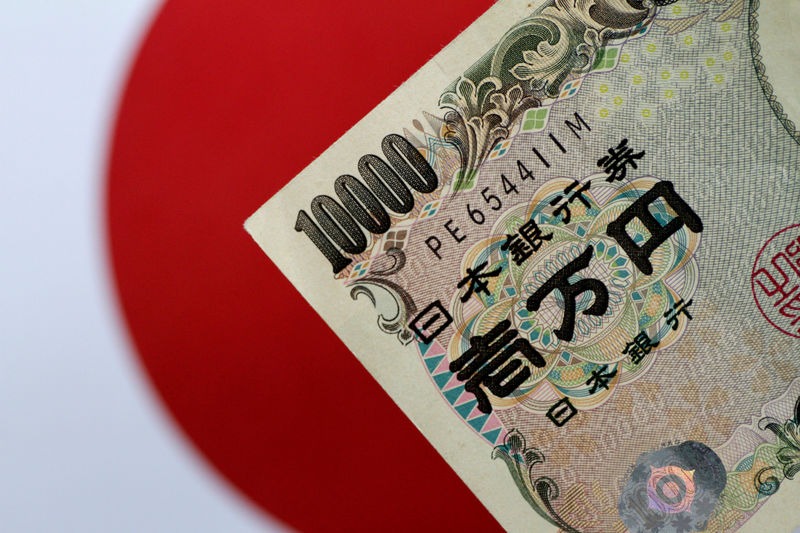
Most Asian currencies were little changed on Monday as investors assessed weak Chinese economic data, while the Japanese yen held firm on expectations of a Bank of Japan interest rate hike later this week.
Currency markets across the region traded in narrow ranges as traders braced for key U.S. releases, including inflation data and the closely watched nonfarm payrolls report, which are expected to shape expectations around the Federal Reserve’s policy path into the new year.
Unlock exclusive forex market insights, analyst research, and price forecasts with an InvestingPro subscription - get 55% off today
The US Dollar Index, which measures the greenback against a basket of major currencies, was largely steady in Asia hours.
China factory output, retail sales figures disappoint Earlier in the session, data showed China’s economic momentum remained uneven in November. Industrial production growth slowed slightly to 4.8% year-on-year, while retail sales rose just 1.3%, sharply missing expectations and underscoring persistent weakness in consumer demand.
"China’s economic momentum continues to weaken in the final stretch of the year, as all key activity data disappointed in November. Policymakers have lots of work to do if domestic demand is going to drive growth in 2026 as planned," ING analysts said in a note.
The Chinese yuan’s onshore pair USD/CNY edged down 0.1%, while the offshore pair USD/CNH was little changed.
The South Korean won’s USD/KRW fell 0.2%, while the Singapore dollar’s USD/SGD traded flat.
3rd party Ad. Not an offer or recommendation by Investing.com. See disclosure here or remove ads. The Indian rupee hit a new record low on Monday, with the USD/INR pair ticking 0.2% higher to 90.71 rupees.
The Australian dollar’s AUD/USD pair traded 0.1% lower.
Japanese yen gains on BOJ hike bets The Japanese yen’s USD/JPY pair fell 0.4%, outperforming peers after a business survey showed improving corporate confidence, strengthening expectations that the Bank of Japan could raise interest rates at its policy meeting later this week.
Markets have increasingly priced in a move following signs of firmer wage growth and easing deflationary pressures.
Investors are also expected to closely scrutinise guidance from BOJ Governor Kazuo Ueda for clues on the pace and extent of further policy normalisation.
"We expect inflation to stay around 3% in November amid growing pressures from services prices. This will keep the BoJ in rate hike mode," ING analysts said in a separate note.