Most Asian currencies were little changed on Monday as traders parsed increased bets on a December Federal Reserve rate cut, and a series of weak factory activity readings across the region.
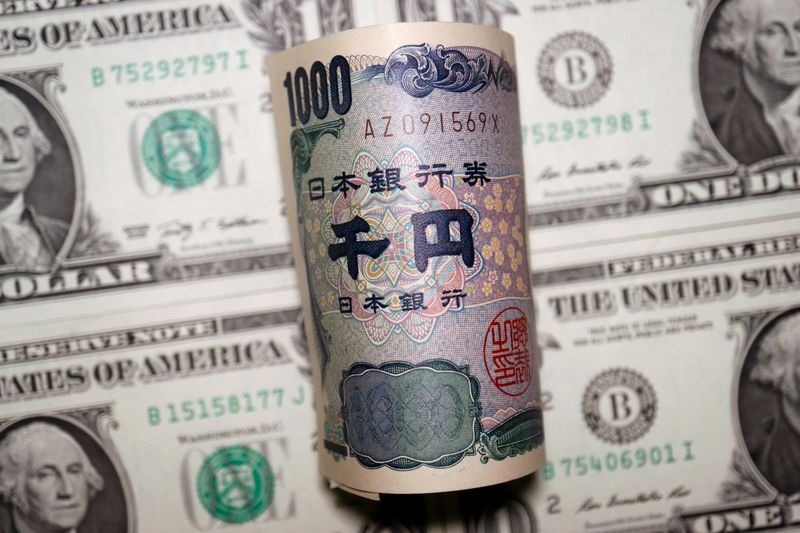
The Japanese yen strengthened the most on renewed expectations of a Bank of Japan rate hike this month.
The US Dollar Index traded marginally lower at a two-week low in Asia hours. US Dollar Index Futures were largely steady as of 05:06 GMT.
Asia FX steady even as Fed rate cut bets firm Markets increased their wagers on a Fed cut after a run of softer U.S. economic data reinforced the view that growth is cooling and inflation pressures are receding. The shift pushed money-market pricing to imply nearly an 85%–90% chance of a quarter-point reduction at the December 9–10 meeting, up from about 40% only a week earlier.
The dollar eased slightly as traders reassessed the U.S. rates outlook, although broader positioning remained cautious due to the lack of key labour and inflation indicators from the government shutdown period.
The Chinese yuan’s USD/CNY onshore pair was largely unchanged on Monday, while the South Korean won’s USD/KRW edged 0.2% higher.
The Indian rupee’s USD/INR pair gained 0.2%, while the Singapore dollar’s USD/SGD was largely flat.
The Australian dollar’s AUD/USD pair ticked down 0.1%.
Weak Asia PMIs in focus; Yen gains on BOJ hike bets Regional sentiment was also weighed down by another round of weak manufacturing readings. China’s factory activity slipped further into contraction, with both official and private PMIs underscoring the eighth straight month of decline.
3rd party Ad. Not an offer or recommendation by Investing.com. See disclosure here or remove ads. The data pointed to subdued domestic demand and weak external orders due to U.S. tariff pressures, extending concerns that China’s recovery remains uneven despite recent policy support.
Japan’s manufacturing sector continued to shrink, with the November PMI remaining below the 50-point threshold for a fifth consecutive month. South Korea’s PMI also contracted again, dragged by soft demand and slowing export momentum.
Amid the mixed signals, the Japanese yen’s USD/JPY pair fell 0.4%, more than most regional currencies, after Bank of Japan Governor Kazuo Ueda signalled that policymakers would consider the “pros and cons” of raising interest rates at the December 18–19 meeting.
Investors interpreted the phrasing as notably hawkish, lifting expectations that the BOJ could deliver its first rate increase since exiting negative rates earlier this year.
The yen strengthened toward the mid-155 per dollar range, supported further by a rise in Japanese government bond yields as traders priced in a higher probability of tightening.