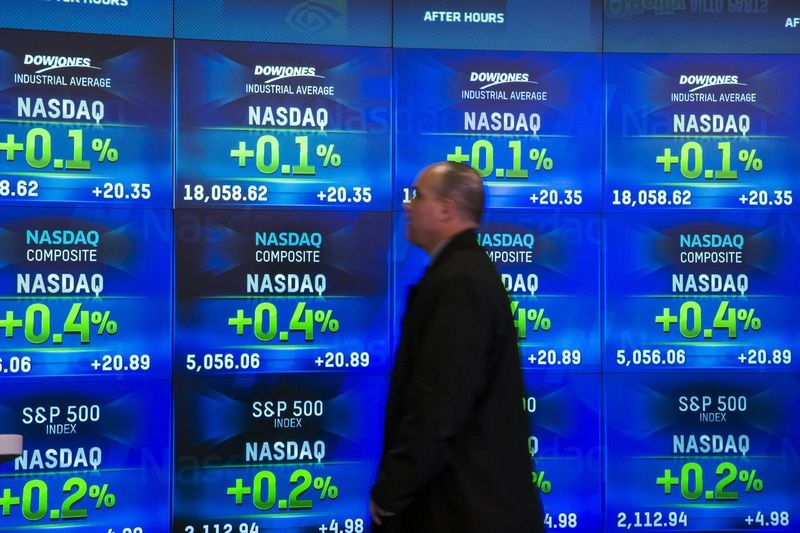
U.S. stock index futures steadied on Wednesday evening after Wall Street closed higher for a fourth consecutive session as investors bet on limited economic impact from an ongoing government shutdown.
Weak labor and purchasing managers index readings also did little to deter Wall Street’s gains, amid sustained bets that the Federal Reserve will cut interest rates at the end of October.
But sentiment still remained on edge, especially amid little clarity on how long the shutdown will last.
S&P 500 Futures were flat at 6,759.50 points, while Nasdaq 100 Futures steadied at 25,018.75 points by 19:16 ET (23:16 GMT). Dow Jones Futures were flat at 46,712.0 points.
US government shutdown begins, payrolls data likely delayed U.S. government agencies began shutting down from early-Wednesday after Congress failed to approve fresh funding.
Services ranging from air traffic control to disaster relief are expected to be disrupted, while key nonfarm payrolls data due on Friday is also expected to be delayed.
It remained unclear just how long the shutdown will last, given that Democrats and Republicans in the Senate appeared no closer to reaching consensus on a spending bill. A Republican-backed spending bill was soundly rejected by the Democrats on disagreements over healthcare subsidies.
President Donald Trump added to the divide by threatening to cut off funding for Democrat-leaning states and fire scores of federal workers permanently.
3rd party Ad. Not an offer or recommendation by Investing.com. See disclosure here or remove ads. Wall Street rises past shutdown fears; healthcare and tech help Wall Street indexes appeared to be little deterred by the shutdown, with all three benchmarks rising for a fourth consecutive session.
The S&P 500 closed at a record high of 6,711.20 points. The NASDAQ Composite rose 0.4% to 22,755.16 points, while the Dow Jones Industrial Average rose 0.1% to 46,411.10 points.
Healthcare stocks were the biggest boost to Wall Street, as they extended a rally from earlier this week on hopes of more regulatory favor for the sector. Technology stocks also pushed higher on lingering optimism over artificial intelligence.
Netflix Inc (NASDAQ:NFLX) was an outlier, losing 2.3% after Tesla Inc (NASDAQ:TSLA) CEO Elon Musk was seen encouraging his social media followers to cancel their subscriptions.
Shutdowns have historically had limited impact on financial markets and the economy. The last shutdown occurred during Trump’s first term– for a span of 35 days between late-2018 and early-2019– and was the longest in U.S. history.
The shutdown cost the economy about $11 billion, the Congressional Budget Office estimated.
With nonfarm payrolls data appearing to be likely delayed this week, investors looked to other readings on the labor market. ADP payrolls data read weaker than expected for September, indicating sustained weakness in the labor market. This trend could also be exacerbated by the shutdown furloughing government workers.
PMI data showed U.S. manufacturing remained in contraction in September. The weak economic prints drove persistent bets that the Federal Reserve will continue to cut interest rates after a cut last month. T