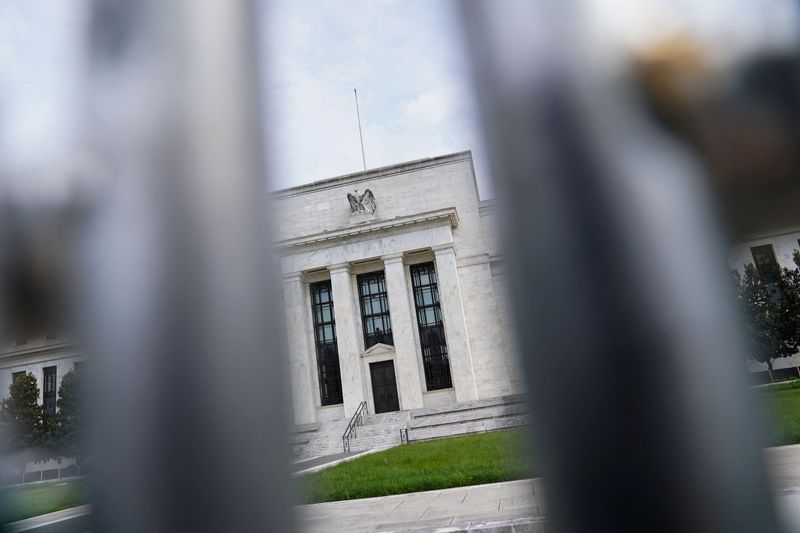
The Federal Reserve faces "no risk-free" choices as officials deliberate over the U.S. central bank’s future monetary policy decisions following an interest rate cut earlier this week, according to analysts at Morgan Stanley.
Along with helping maximize employment, the Fed is also tasked with pushing for price stability -- and the Morgan Stanley analysts led by Michael Gapen flagged that both the labor market and inflation are "moving in the wrong direction."
As a result, policymakers must try to use interest rates to strike a balance between supporting a softening jobs picture and corralling sticky inflationary pressures. In theory, cutting borrowing costs can encourage investment and hiring, albeit at the risk of driving up prices.
So far, the Fed has opted to prioritize employment, arguing that a recent tariff-driven uptick in inflation may prove to be temporary. The Fed slashed rates as expected on Wednesday, bringing down borrowing costs by a quarter point to a target range of 4% to 4.25%.
Fed Chair Jerome Powell described the reduction as a form of "risk management," signalling that weakening jobs data is playing heavily into officials’ thinking and have presented increased "downside risks to employment."
"The Fed seeks to mitigate downside risk to employment by taking its policy stance from restrictive to a more neutral setting," the Morgan Stanley analysts said, referring to a theoretical rate which neither boosts nor hinders growth.
They added that "more rate cuts are forthcoming." Crucially, the Fed’s announcement included fresh so-called "dot plot" policy projections which showed that officials are anticipating another half percentage point in rate cuts by the end of 2025.