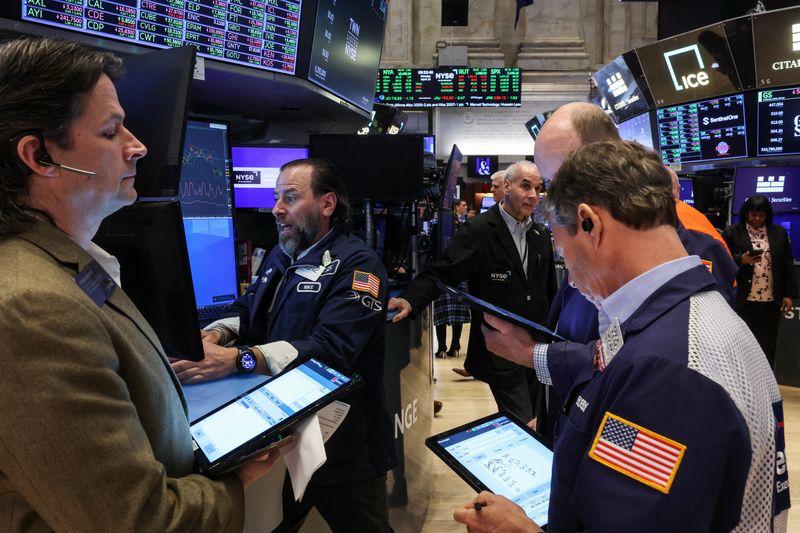
Global stocks climbed to a record high last touched in February, as investors assessed hopes for possible U.S. trade talks with its major trading partners and data pointing to broader economic resilience despite headwinds from President Donald Trump’s aggressive tariff agenda.
The main averages on Wall Street ended higher on Tuesday, buoyed in particular by chip stocks, with traders awaiting more details on potential trade negotiations between the U.S. and a host of other countries.
The White House has said that President Donald Trump will speak with Chinese counterpart Xi Jinping this week, just days after Trump accused Beijing of violating a prior agreement to ease tit-for-tat levies. China has refuted the allegations. Writing on Truth Social on Wednesday, Trump called Xi "very tough" and "extremely hard to make a deal with".
"Markets may also be adopting a slightly more optimistic stance on U.S.-China trade tensions ahead of the scheduled Trump-Xi call this week," strategists at ING said in a note to clients. "Recently, such direct talks have eased trade pressures."
Media reports have said that Trump officials have given countries until Wednesday to put forward their best offers for negotiations related to the U.S.’s heightened "reciprocal" tariffs. A delay to the punishing import duties, which were first unveiled at a "Liberation Day" event in April, is due to expire in early July.
Meanwhile, despite these indications that Washington is open to trade talks, Trump has ratcheted up his tariff push again, this time by doubling the levy rate on most imported steel and aluminum to 50%.
Trump signed an executive proclamation increasing the tariffs late on Tuesday, following through on a surprise threat launched last week. The duties will be in effect from Wednesday.
Still, recent data points have suggested that the U.S. economy has stayed healthy even as the tariff headwinds loomed large.
Markets will have the chance to parse through private payrolls data later today that could shed further light on the impact of Trump’s tariff agenda on the American labor market.
Economists anticipate that the ADP National Employment Report will show that private employers added 111,000 jobs in May. The reading slowed sharply to 62,000 in April -- a decline that was attributed by ADP to "employers [...] trying to reconcile policy and consumer uncertainty with a run of mostly positive economic data".
It can be more difficult for companies to make hiring decisions in this type of operating environment, ADP flagged.
Separate data on Tuesday from the U.S. Labor Department found that job openings grew in April, although layoffs increased, potentially indicating some softening in the labor market.
The figures serve as precursors to the release of the all-important monthly nonfarm payrolls report on Friday.